The Malaysian government has announced a series of significant reforms to its foreign worker management system, aiming to make the recruitment process more transparent, secure, efficient, and well-regulated. The new measures are designed to improve worker protection, reduce irregularities, and strengthen oversight of foreign labor management.
According to Human Resources Minister R. Ramanan, these reforms are part of Malaysia’s long-term strategy to modernize its foreign workforce administration while ensuring that foreign workers are employed by their legally approved employers.
New Transit Centres for Foreign Workers
One of the most important changes is the introduction of Government Transit Centres for newly arrived foreign workers.
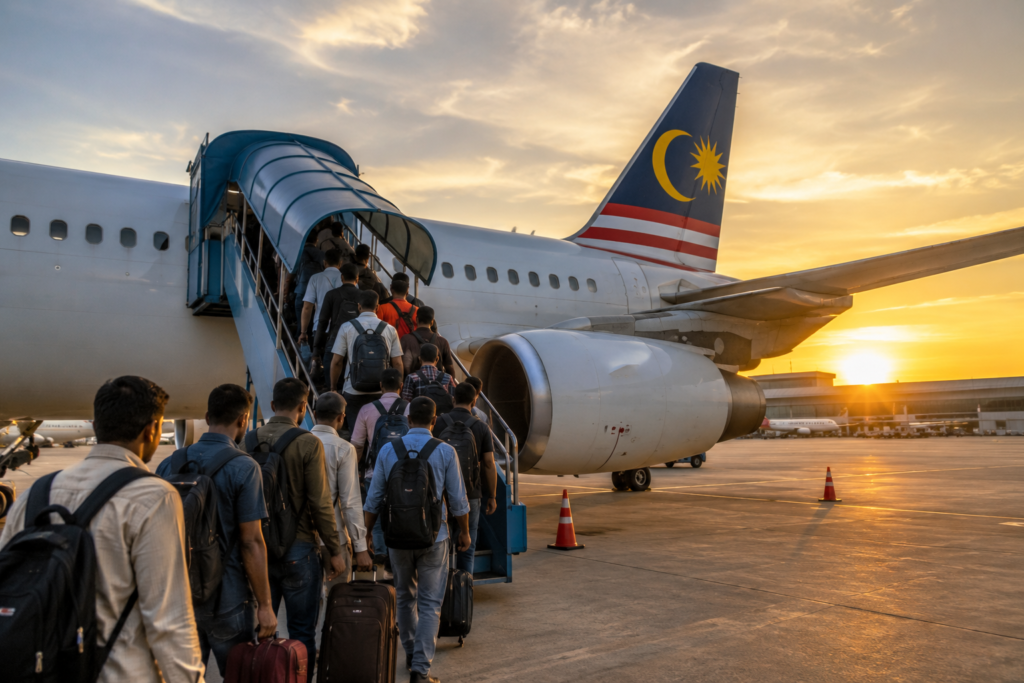
Upon arrival in Malaysia, foreign workers will first be accommodated at a designated transit centre before being transferred to their registered employers.
During their stay at the transit centre, authorities will complete several important verification procedures, including:
- Identity verification
- Visa and work permit verification
- Employment contract verification
- Verification of supporting documents
- Health screening
- Administrative processing
Only after successfully completing these procedures will workers be released to their officially registered employers.
Important: These facilities are not detention centres. They are temporary transit and verification centres established to ensure a secure and orderly arrival process.
Why Is Malaysia Introducing This System?
The Malaysian government stated that the new transit centre initiative aims to:
- Reduce congestion at airports and major entry points.
- Prevent workers from being diverted to unauthorized individuals or companies.
- Combat illegal recruitment networks and labor trafficking.
- Ensure workers report directly to their approved employers.
- Strengthen transparency throughout the foreign worker recruitment process.
Temporary Accommodation Capacity
During the initial implementation phase, the transit centres will be capable of accommodating approximately 1,000 to 2,000 foreign workers at a time.
Temporary facilities will be used until permanent transit centre infrastructure is completed.
One Stop Centre (OSC) Now Under the Ministry of Human Resources
Malaysia has also restructured the operation of the One Stop Centre (OSC) responsible for foreign worker administration.
Key updates include:
- The OSC will now operate entirely under the Ministry of Human Resources.
- Employers must submit foreign worker quota applications online through the FWCMS eQuota Module.
- The previous Case-by-Case Approval system has been discontinued.
These changes are expected to create a faster, more transparent, and fully digital application process.
Establishment of the Foreign Worker Management Division
The Ministry of Human Resources will establish a dedicated Foreign Worker Management Division to oversee:
- Foreign worker recruitment
- Policy implementation
- Regulatory compliance
- Worker monitoring
- Coordination among relevant government agencies
This specialized division is expected to improve governance and strengthen the overall foreign labor management system.
Strict Compliance Requirements for Employers
The Malaysian government has also issued a strong warning to employers regarding their legal responsibilities.
Employers must:
- Provide accommodation that complies with Malaysian labor laws.
- Ensure workers receive fair treatment and legal employment conditions.
- Comply with all labor and immigration regulations.
Regular inspections will be conducted jointly by:
- The Labour Department (JTK)
- The Ministry of Home Affairs (KDN)
Employers found violating labor rights, accommodation standards, or employment regulations may face strict legal action.
What Does This Mean for Bangladeshi Workers?
The newly announced reforms are expected to have several positive implications for future recruitment from Bangladesh.
Potential benefits include:
- Greater transparency in the recruitment process.
- Better protection against fraud and illegal intermediaries.
- Improved assurance that workers are placed with their registered employers.
- Enhanced protection of workers’ rights and welfare.
- More efficient and accountable foreign worker management.
However, it is important to note that Malaysia has not yet officially announced the full reopening of new worker recruitment or Calling Visa issuance for Bangladeshi workers. No formal government announcement has been made regarding the complete resumption of recruitment.
Final Thoughts
Malaysia’s latest foreign worker reforms represent a significant step toward building a more transparent, secure, and digitally managed labor migration system. The introduction of government transit centres, a fully digital quota application process, stronger employer compliance measures, and a dedicated Foreign Worker Management Division demonstrates the government’s commitment to protecting foreign workers while improving recruitment governance.
For Bangladeshi job seekers and overseas recruitment agencies, these developments are encouraging. However, applicants should continue to rely only on official government announcements regarding the reopening of recruitment programs.
Stay connected with us for the latest updates on Malaysia work visas, overseas job opportunities, foreign worker recruitment policies, labor market news, and international travel and immigration information.